AI Personas vs. Traditional Focus Groups: What Agencies Need to Know
Jason Solomons
March 28, 2026
A traditional focus group costs $8,000 to $15,000, takes 4 to 6 weeks to organize, and gives you 8 to 12 opinions from people who showed up because you paid them $150 each.
For most agencies, that means focus groups simply don't happen. The budget isn't there. So creative decisions get made on gut feeling, and nobody questions it because "that's how it's always been done."
That's the gap AdForge was built to close.
The Problem with Traditional Focus Groups
The process works. It's been the gold standard since the 1950s. But it has blind spots that make it impractical for most agencies:
Small Sample Sizes
8-12 people is not statistically significant. One dominant personality skews the entire group.
Selection Bias
People who sit in a room for 90 min for $150 aren't representative of your audience.
Social Desirability
People say what they think the group wants to hear. Nobody admits they buy the cheapest option.
Geography Limits
Your focus group is in New York. Your target customer is in Tulsa. Those are different people.
And the biggest problem: cost and time. By the time you've spent $12K and waited 6 weeks, the campaign window has closed. The creative ships without testing because the schedule demands it.
How AdForge Solves This
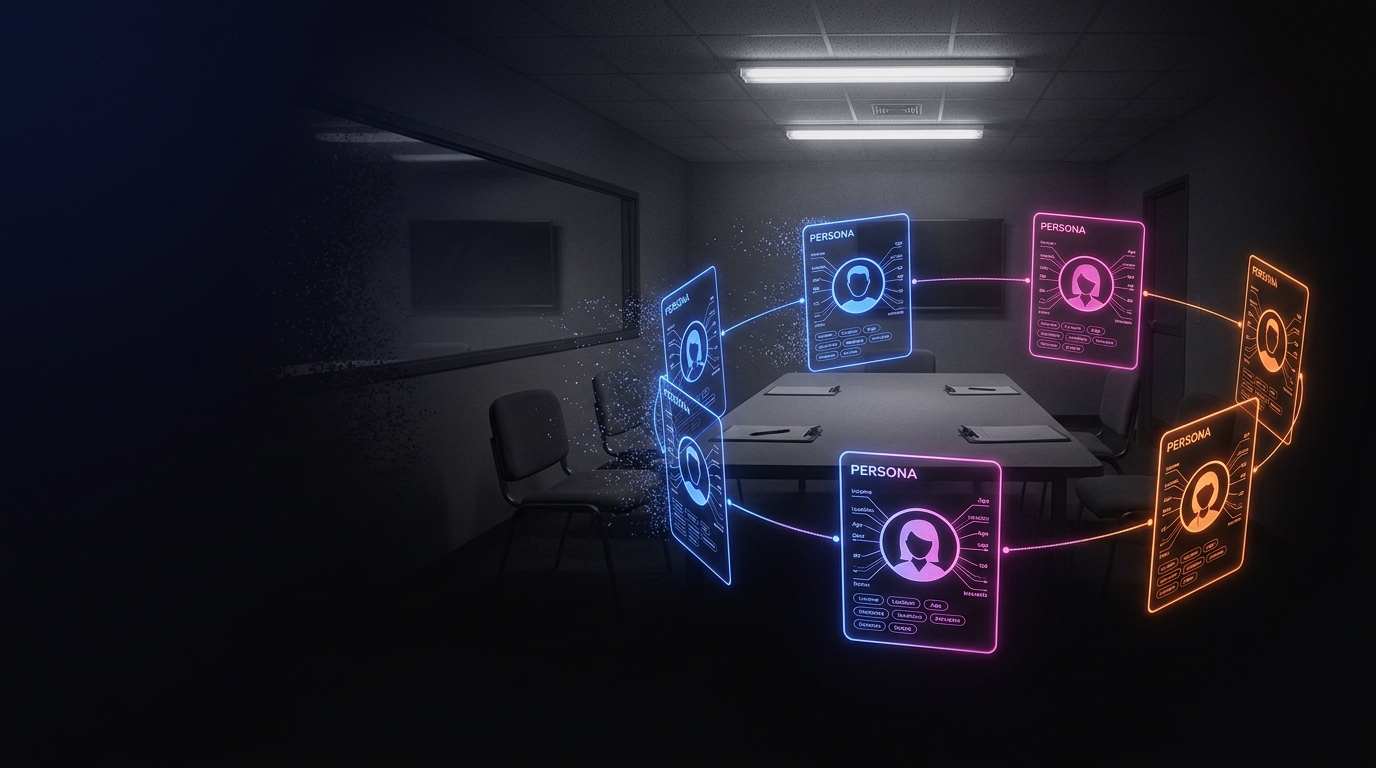
AdForge's AI-powered personas aren't random characters. They're synthetic consumer profiles built from real US Census Bureau data: actual income distributions, education levels, household compositions, and demographic breakdowns for any ZIP code in America.
AdForge Persona Example
A 34-year-old woman in Denver making $72K, working in B2B SaaS, with a 2-year-old, who spends 45 minutes daily on Instagram and shops primarily at Target and Whole Foods.
Generated in seconds. Validated against Census data. Ready for focus group testing.
Then you run those personas through AdForge's simulated design reviews. Present a concept, creative, or strategy, and each persona responds based on their demographic profile and consumer behavior patterns. Ask follow-up questions instantly. Get a structured report you can put in a client deck.
Head-to-Head Comparison
| Traditional | AdForge | |
|---|---|---|
| Cost | $8K-$15K | Included in plan |
| Time | 4-6 weeks | Minutes |
| Perspectives | 8-12 | Unlimited |
| Geography | One city | Any US ZIP code |
| Follow-ups | Reschedule | Instant |
| Concepts per session | 1-2 | Unlimited |
| Client-ready report | 2-3 week turnaround | Generated instantly |
When to Use Each
Traditional focus groups still have a place for final validation on high-stakes campaigns, regulatory contexts, and categories where in-person emotional response matters (luxury, healthcare).
But for the 95% of creative decisions that don't justify a $12K spend and 6-week wait? That's where AdForge lives.
Use AdForge For:
- Screening 10 concepts down to 3
- Testing messaging across demographics
- Quick pre-meeting validation
- Every campaign, every client
- Building data-backed client decks
Keep Traditional For:
- Final validation on $500K+ campaigns
- Regulatory or compliance requirements
- Client-mandated in-person research
- Luxury and healthcare categories
- When the budget specifically allows it
What This Means for Your Agency
If you're a 5-15 person agency managing DTC brands, you've been making creative decisions without consumer research because research was too expensive and too slow.
AdForge changes that. Not by replacing traditional research, but by making research part of every campaign instead of a luxury reserved for the biggest clients.
Your competitor is presenting creative based on gut feeling. You're presenting creative backed by Census-validated personas and AI design review data. Which agency keeps the client?
Stop choosing between research and no research.
AdForge makes consumer research part of every campaign you run.
Ready to try data-backed ad creative?
Generate a report on a brand you actually care about and see what comes back.
Get Started